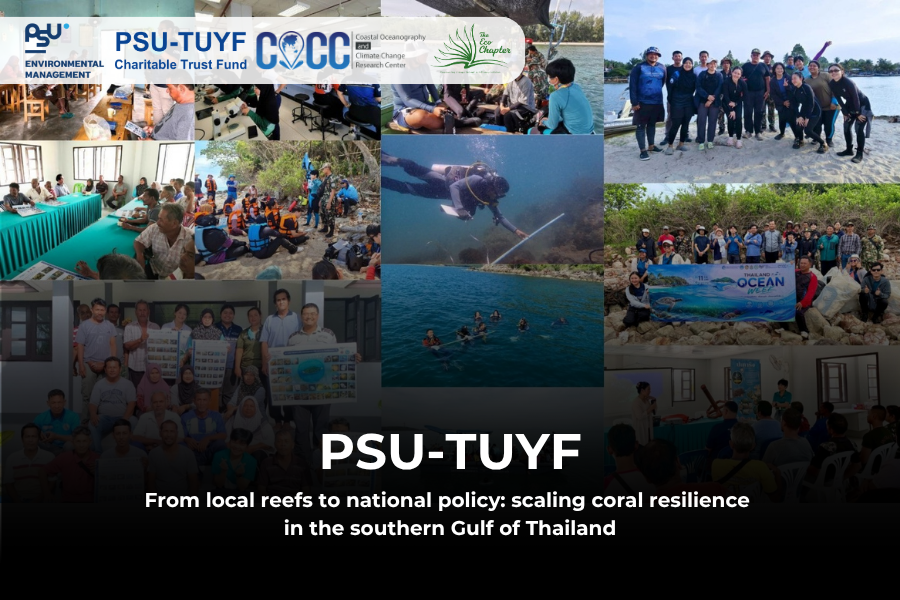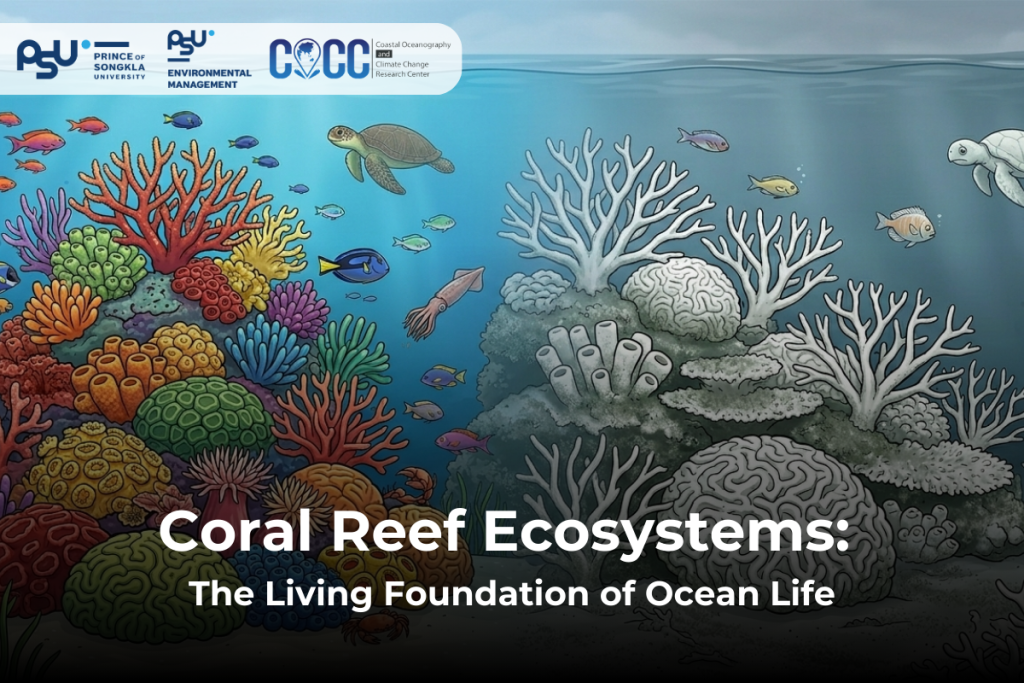
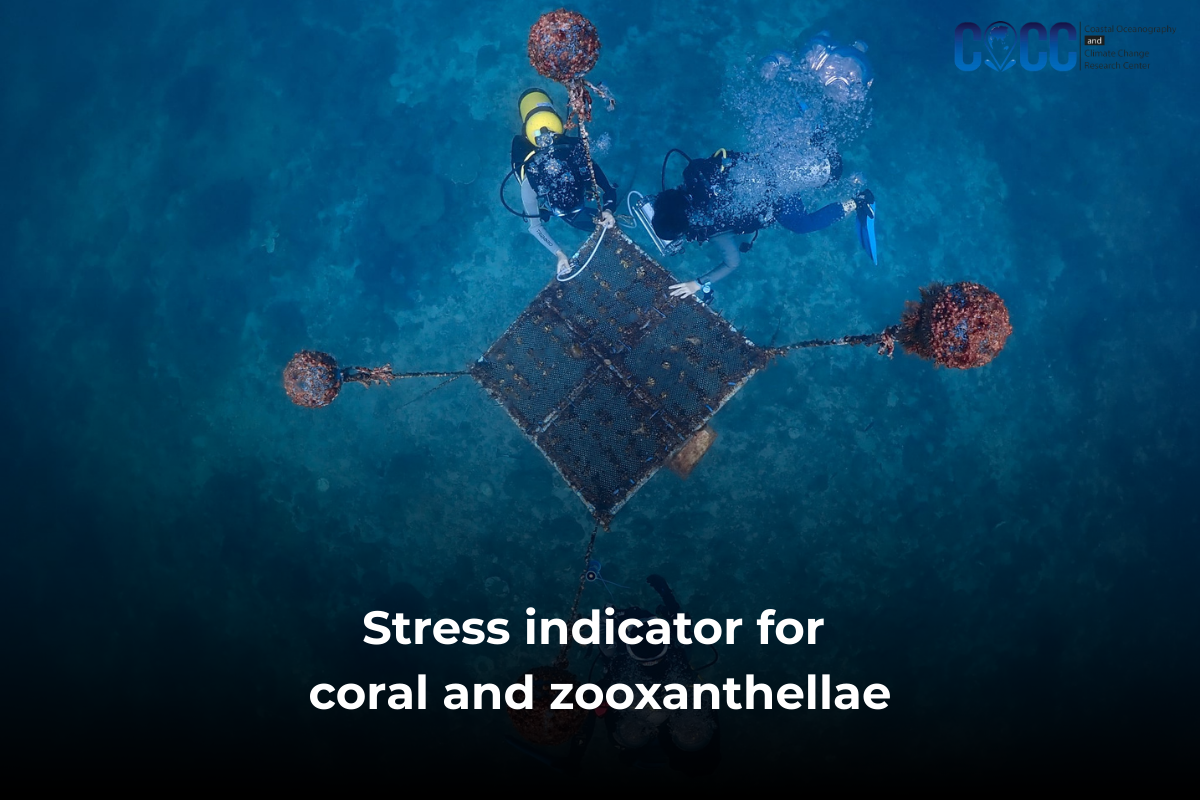
The guideline is an output of the research project “Stress Indicator for Coral and Zooxanthellae at the Southern Reef of Phuket for Resistance to Coral Bleaching”, conducted through a collaboration between members of the Coastal Oceanography and Climate Change Research Center (COCC) —Dr. Mathinee Yucharoen, Asst. Prof. Dr. Sutinee Sinutok, Dr. Ponlachart Chotikarn, and Dr. Manasawan Saengsakda Pattaratumrong—and Dr. Lalita Putchim from the Department of Marine and Coastal Resources, with support from the National Science and Technology Development Agency (NSTDA).
The coral and zooxanthellae stress index is a tool used to assess coral stress and bleaching conditions based on seawater temperature and changes in the marine environment. It supports systematic monitoring and forecasting of coral bleaching risks associated with global warming and climate change.
Coral stress is evaluated when seawater temperatures exceed normal averages. Sustained temperature increases of approximately +1 to +3 degrees Celsius over several weeks can elevate bleaching risk, ranging from early warning levels to critical conditions that may lead to coral mortality.
The guideline also provides recommended response and management measures, including close temperature monitoring, reducing activities that disturb coral reefs during high-risk periods, managing water quality and sedimentation, and communicating coral bleaching information to the public and relevant stakeholders.
The coral stress index is therefore an important tool supporting coral reef conservation and promoting collaborative efforts to ensure the long-term health and sustainability of marine ecosystems. 🌊🐚
The Coral Stress Indicator Guideline is available for download: