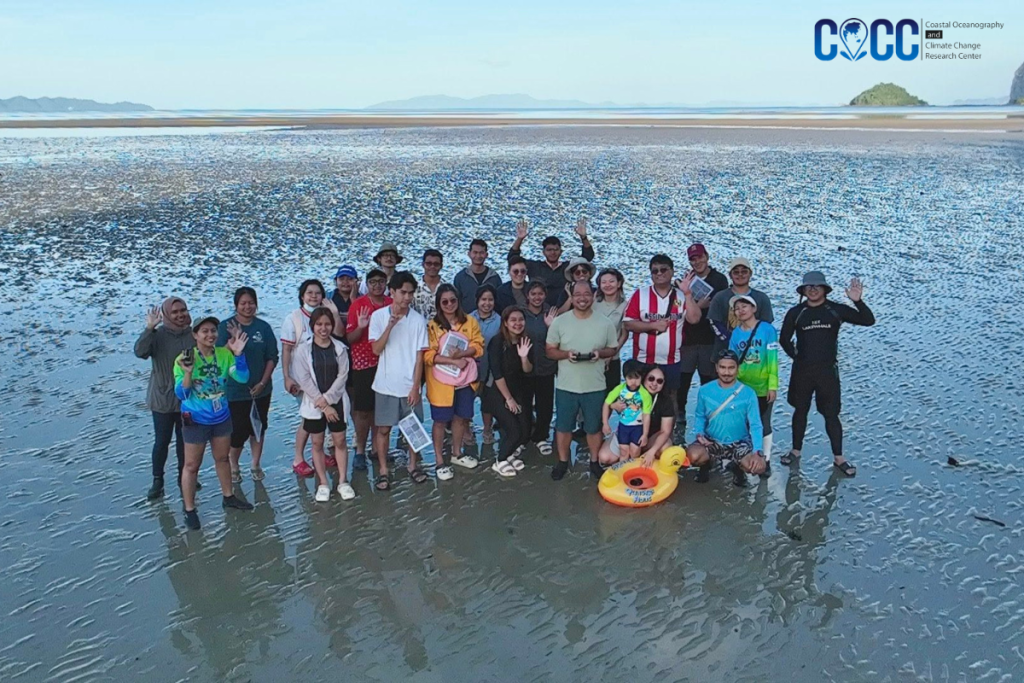
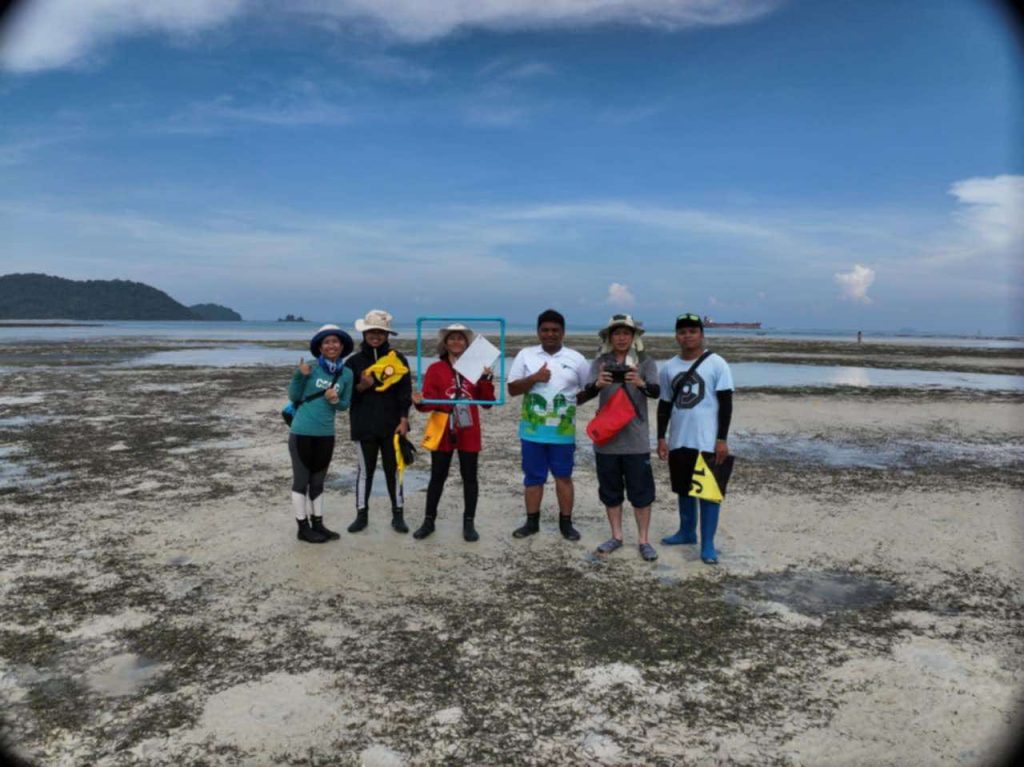
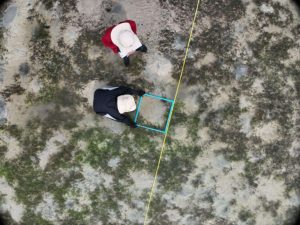
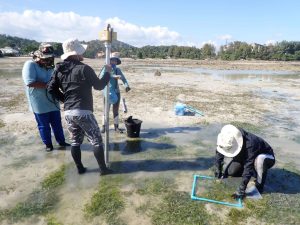
From 13–16 November 2024, COCC researchers conducted a field survey and monitoring of seagrass conditions at Ao Tang Khen and Pa Khlok Beach in Phuket Province, applying the Line Transect method to assess species composition and overall seagrass bed condition.
At Ao Tang Khen, a total of 6 seagrass species were recorded, including Cymodocea rotundata, Cymodocea serrulata, Enhalus acoroides, Halodule uninervis, Halodule pinifolia, and Halophila ovalis. Among these, Cymodocea rotundata and Cymodocea serrulata were identified as the dominant species, indicating relatively healthy and well-established seagrass beds in the area.
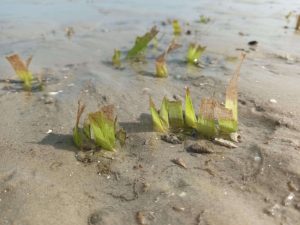
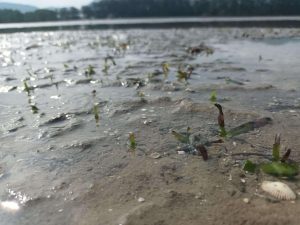
In contrast, the seagrass beds at Pa Khlok Beach were found to be in a significantly degraded condition, with observations showing only incomplete seagrass leaves remaining. 4 seagrass species were identified at this site: Enhalus acoroides, Cymodocea serrulata, Cymodocea rotundata, and Thalassia hemprichii. The degraded state of the seagrass beds suggests potential pressures from environmental and human-related factors, highlighting the need for continued monitoring and effective management measures.
The findings from this survey provide essential baseline data for understanding seagrass ecosystem health in Phuket Province and support future conservation planning, restoration efforts, and sustainable coastal resource management.