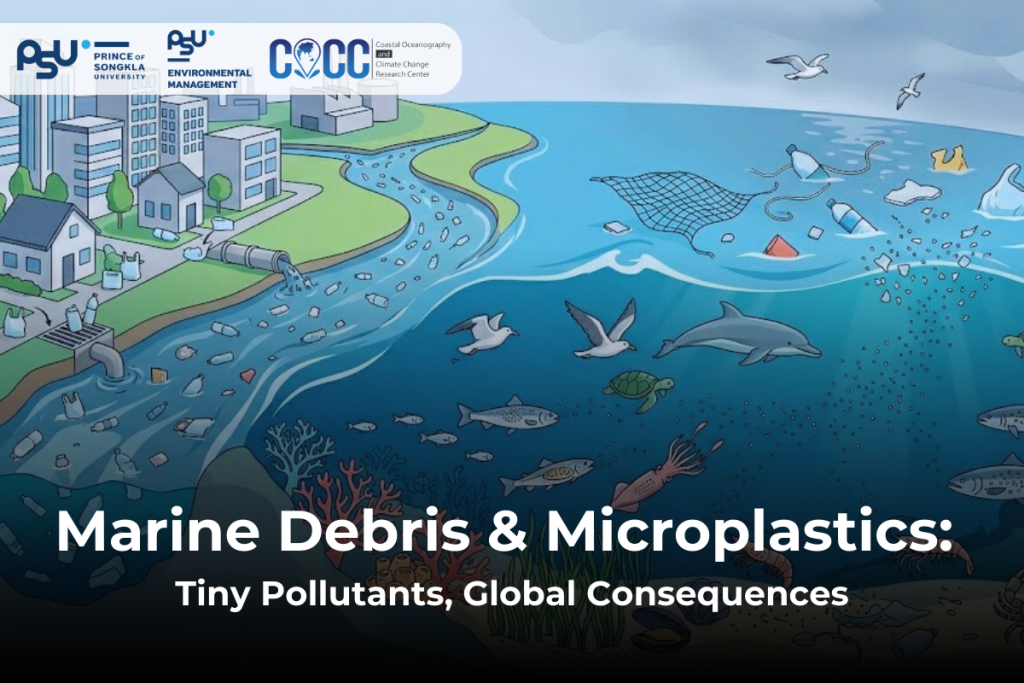
Marine debris, particularly plastic waste, has become one of the most pressing environmental challenges of our time. When improperly managed, plastic waste entering the ocean is gradually broken down by sunlight and wave action into microplastics—particles smaller than 5 millimeters. These tiny pollutants are now widely distributed across marine environments, from surface waters to sandy beaches and ocean sediments.
Marine organisms such as fish, shrimp, and shellfish often mistake microplastics for food, leading to ingestion and accumulation within their bodies. Furthermore, microplastics can act as carriers of toxic substances, including heavy metals, which may enter the food chain and pose potential risks to human health.
Addressing this issue begins with individual and collective action. Reducing single-use plastics, properly separating waste, and supporting sustainable waste management systems are essential steps to prevent further contamination. Protecting the ocean from plastic pollution ultimately safeguards both ecosystem health and human well-being.