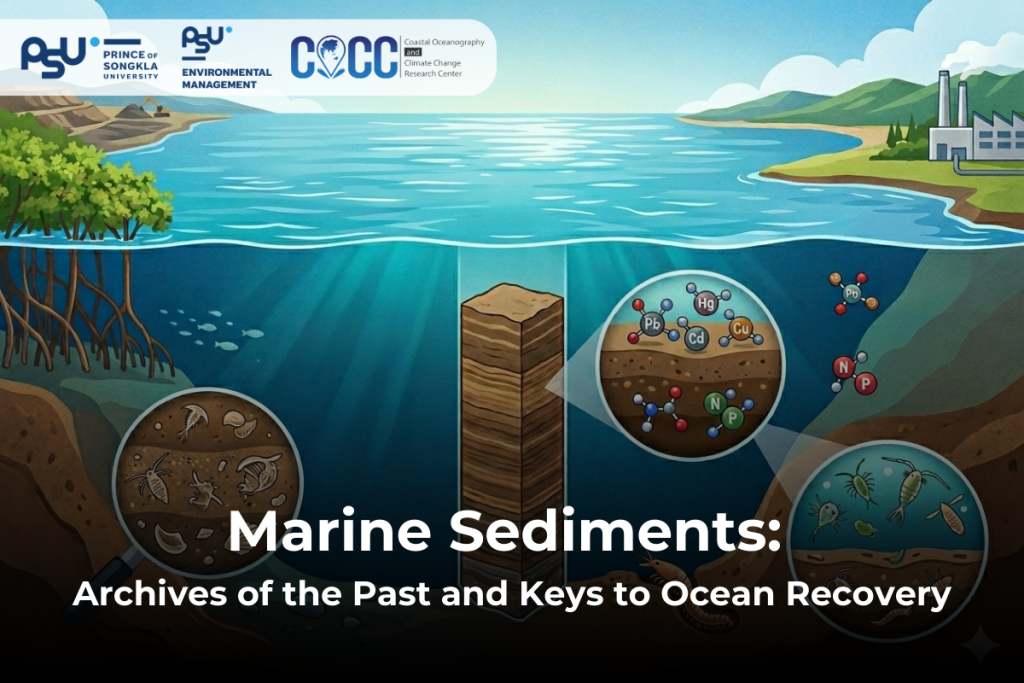
Marine sediments may appear still and unremarkable, yet they serve as one of the most valuable natural records of Earth’s history. Much like tree rings, layers of sediment preserve evidence of past environmental changes, including sea-level fluctuations and climate variability over thousands to millions of years.
At the same time, marine sediments act as major sinks for pollutants. Heavy metals such as lead, mercury, and cadmium—originating from industrial activities and mining—can accumulate and remain stored within these layers for long periods.
However, changes in environmental conditions, such as shifts in pH or salinity, can trigger the release of these trapped substances back into the water column. This process can degrade water quality and pose significant risks to marine ecosystems.
Understanding and managing marine sediments is therefore essential for effective ocean restoration. These hidden layers beneath the seafloor hold critical insights that can guide sustainable management and help protect marine environments for the future.